
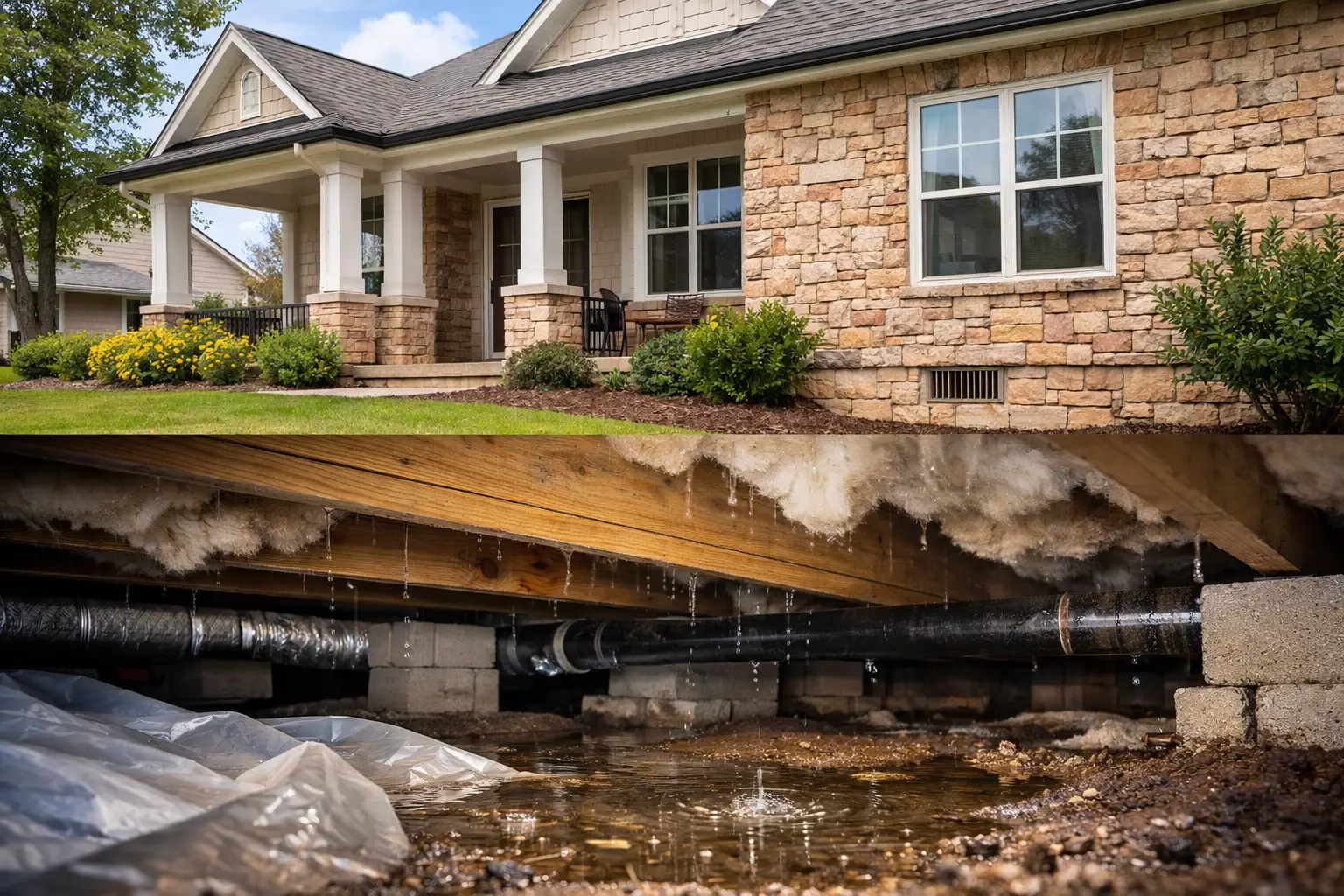
A crawl space can look quiet and harmless right up until the day the floors start cupping, the insulation falls, or a musty odor reaches the living area. In Southeast Texas, that risk is not theoretical. High humidity, heavy rain, poor drainage, plumbing leaks, and vented crawl space designs can combine to keep wood framing damp for long periods. This crawl space moisture guide is built to help buyers and property owners understand what matters, what is cosmetic, and what deserves immediate correction.
Why crawl space moisture matters
Moisture under a house does not stay under the house. It affects framing, insulation, subflooring, indoor air quality, and in some cases the foundation itself. Persistent damp conditions can contribute to fungal growth, wood decay, corrosion at metal components, and conditions favorable to wood-destroying insects. In our area, that overlap between moisture and pest risk is especially important because termites and other organisms tend to take advantage of wet wood and concealed conditions.
There is also a practical side buyers sometimes miss. Crawl space defects often do not announce themselves with a dramatic failure. Instead, they show up as gradual symptoms – uneven floors, swollen trim, recurring mildew odors, elevated indoor humidity, and HVAC performance issues. By the time those symptoms become obvious, corrective work may involve more than one trade.
The main causes in a crawl space moisture guide
Most crawl space moisture problems come from a short list of conditions, but the source is not always where the damage appears. That is why inspection matters.
Exterior drainage problems
Water should move away from the structure, not toward it. When grading slopes back toward the home, when gutters discharge near the foundation, or when downspouts terminate too close to perimeter walls, the crawl space often becomes the collection point. After a hard rain, this may show up as standing water, muddy soil, or damp pier surfaces.
In Southeast Texas, clay soils and intense storm events can make drainage defects more serious. A house may appear dry during one visit and still have a long history of seasonal wetting. That is one reason a visual inspection should consider site conditions, drainage paths, vegetation, and signs of previous water entry, not just whether water is present at that exact moment.
Plumbing leaks and condensate issues
A small drain leak or supply leak can keep a crawl space wet for months. Leaking tub drains, loose toilet seals, dripping supply lines, and air handler condensate discharge problems are common contributors. These leaks do not always create dramatic puddling. Sometimes the clue is localized staining, softened soil, rusted hangers, or fallen insulation directly below a bathroom or mechanical area.
Condensation can also be part of the problem. Cold ducts and piping in hot, humid conditions can sweat enough to wet surrounding materials. The fix may involve insulation, sealing, and humidity control rather than pipe replacement alone.
Ground moisture and missing vapor barriers
Even without active leaks, damp soil releases moisture into the crawl space air. If the ground is bare or the vapor barrier is damaged, incomplete, or poorly sealed, humidity can remain elevated for extended periods. That moisture then condenses on cooler surfaces or gets absorbed by wood members over time.
A vapor barrier helps, but it is not a cure-all. If bulk water is entering from drainage defects or plumbing leaks, laying plastic over wet soil without solving the source can trap problems instead of correcting them.
Ventilation and humid outdoor air
Many older crawl spaces rely on perimeter vents. In a dry climate, ventilation may help. In Southeast Texas, outdoor air often carries so much moisture that venting can make conditions worse, especially during long humid seasons. Warm wet air entering a shaded crawl space can push relative humidity high enough for mold-like growth and condensation.
This is one of those areas where the answer depends on the house. Some crawl spaces perform better with traditional venting and improved drainage. Others need a more controlled approach with a sealed ground cover, limited air leakage, and mechanical humidity management.
What an inspector looks for
A thorough crawl space review goes beyond spotting mud and calling it a day. The goal is to identify active moisture, evidence of repeated moisture, and the damage or risk that follows.
Signs of active or repeated moisture
Inspectors look for standing water, damp soil, staining on piers and foundation walls, rust at metal supports, and wet or compressed insulation. Wood framing may show darkened areas, fungal growth, or elevated moisture readings where conditions allow testing. Fasteners can corrode. HVAC ductwork may show condensation or microbial growth on outer surfaces.
The absence of visible water does not end the conversation. Tide marks, previous repairs, water staining, and musty odors can indicate a recurring condition tied to weather patterns.
Damage to structural and building components
Subflooring and joists are especially important. Prolonged moisture can cause rot, wood fiber deterioration, and reduced structural capacity. Support beams, sill plates, and piers should also be checked for displacement, deterioration, and insect activity. When moisture is present long enough, the conversation often shifts from cleanup to repair.
Floor insulation is another common casualty. Once insulation falls or remains wet, it loses effectiveness and can hold moisture against wood framing. That can accelerate deterioration instead of preventing it.
Conditions that attract termites and wood-destroying insects
Moisture and wood contact are a bad combination. If crawl space framing is damp, if cellulose debris is left below the home, or if there is poor clearance between soil and wood members, insect risk increases. Mud tubes, damaged wood, and concealed areas around piers and utility penetrations deserve close attention. For many buyers, this is not a minor side note. It can affect treatment needs, repair scope, and in some transactions, loan requirements.
Common fixes and when they make sense
The right repair depends on the source. Treating symptoms alone usually wastes money.
If exterior drainage is the driver, grading correction, gutter improvements, downspout extensions, and in some cases drainage collection systems may be needed. If plumbing is the source, repairs should be followed by drying and reevaluation of damaged materials. If ground moisture is persistent, a properly installed vapor barrier may be recommended. In higher-risk crawl spaces, dehumidification or encapsulation can be appropriate, but not every house needs full encapsulation.
That trade-off matters. Encapsulation can improve moisture control, energy performance, and air quality when designed and maintained correctly. It also costs more and may require ongoing monitoring. A basic vapor barrier and drainage correction may be sufficient for one property and inadequate for another. The age of the house, vent configuration, HVAC location, and history of water entry all influence that decision.
What buyers should ask before closing
If a crawl space shows moisture concerns, buyers should ask how recent the problem appears, whether there is evidence of structural damage, whether wood-destroying insect conditions exist, and whether the issue is likely tied to weather, plumbing, or site drainage. They should also ask whether conditions were fully visible at the time of inspection. Some crawl spaces have limited clearance, stored materials, or insulation that restricts access and can conceal damage.
It is also reasonable to ask what type of specialist should evaluate repairs. A plumber, drainage contractor, foundation contractor, pest professional, or mold remediation company may each have a role depending on the findings. One contractor does not automatically cover the whole problem.
A practical crawl space moisture guide for owners
For existing owners, the best approach is routine observation before symptoms spread. Check the exterior after heavy rain. Make sure downspouts carry water away from the structure. Watch for recurring musty odors indoors. Pay attention to floor changes near bathrooms, kitchens, and mechanical rooms. If you have a vented crawl space, understand that summer humidity may be part of the problem even when there is no obvious leak.
Professional inspection is valuable because crawl spaces hide conditions that homeowners rarely see clearly. Moisture meters, infrared thermography in the right circumstances, and experienced visual evaluation can help separate isolated dampness from a broader defect pattern. Texas Country Inspection approaches these areas with the same no-shortcuts mindset used across the rest of the structure because crawl space conditions often connect directly to more expensive problems above.
A dry crawl space is not just about comfort. It protects framing, helps limit pest activity, supports better indoor conditions, and reduces the chance that a manageable defect turns into a major repair. If something smells off, feels damp, or shows movement, it is worth looking under the house before the house starts telling you louder.

3 Comments